Metal Processing
The method of laser metal cutting is carried out through the impact of a narrowly focused beam of planned power. The main advantage of this method is the absence of metal deformation during processing.
This method is used for manufacturing metal products with complex shapes.
The amount of metal waste will be minimal. It is a highly productive method achieved through the high power of the laser beam.
Company production sites:
Uzhgorod,
Kharkiv.

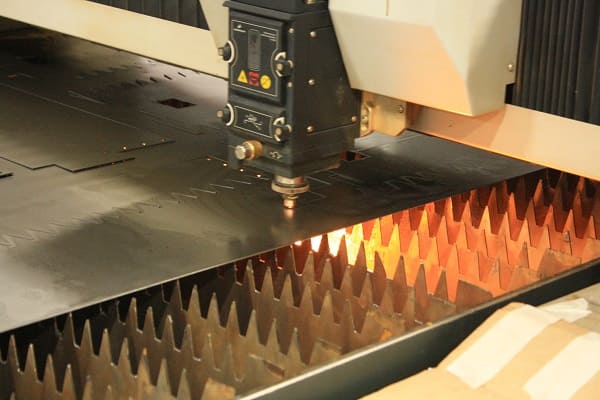
Laser cutting services are performed on high-performance modern fiber-optic machines. The working table size is 1500x3000mm. We cut black steel up to 16mm thick and stainless steel up to 6mm thick.
The laser cutting technology involves point heating of the metal to high temperatures, resulting in a precise cut of the part. The effect of laser light beams prevents changes in the metal’s structure, which could lead to mechanical deformation and its destruction. Therefore, laser cutting is considered one of the best methods for producing complex and large metal products.
The price for laser cutting depends on the volume of the upcoming work, the level of complexity, the type and quantity of consumables, and the type of laser cutting itself.


Laser cutting of metal is a modern method for cutting and processing sheet metal products. The technology of laser metal cutting, where a beam of adjustable power is used as the tool and focused on the work surface, ensures high-quality cuts of varying thicknesses and metal properties.
Thanks to modern laser machine technologies, it is possible not only to cut metal but also to engrave the material’s surface with a laser. These capabilities allow for detail marking, artistic engraving, and burning the company’s logo onto the surface. The possibilities of this equipment are limitless.
Submit a request now and get a free consultation

The precision of metal-processing is simply impressive! The laser cutting was done with high quality, and all the products have a very attractive appearance. I am very satisfied with the cooperation with “Eskal”.
We approached “Eskal” to create an incredibly complex product design. In the shortest time, we received several dozen precisely cut products. We are very pleased with the results!
“Eskal” provided excellent laser cutting of the supplied metal. The quality of the work is flawless. The finished products are simply superb!
Lasers used in the industry are generally divided into the following types:
– Gas lasers
– Solid-state lasers
– Fiber lasers
– Semiconductor lasers
There are also several other types, including experimental ones (such as photonic crystal lasers, free-electron lasers, Raman lasers, etc.), but these are the main ones.
Machines with gas lasers have become the most widespread due to their simple and cost-effective production.
Yes, absolutely. One of the main advantages of laser cutting is the ability to manufacture various complex, including very intricate, parts.
This is achieved through software-controlled, automated operation, and the laser beam itself is very thin and has excellent positioning.
During laser cutting, the metal along the cutting line melts, and the molten material is blown away by compressed gases. Objectively, there is thermal impact along the cut, so it would be misleading to say that there is no burning.
However, it’s important to note that the cutting process is very fast and not prolonged over time, so the thermal impact on the cutting zone is minimal. The characteristics of the laser machine, particularly its power, also play a significant role here. At lower power, the metal melting process takes more time, leading to longer thermal exposure, which can cause what is known as “edge burning.”


