Metal Processing
Metal Welding is a technological process used to create metal bonds by establishing interatomic connections between them.
Modern developments allow welding under various conditions, providing maximum protection of the parts from the negative effects of mechanical and thermal energy during the process.
Additionally, this method of connecting parts is considered versatile and economically advantageous.

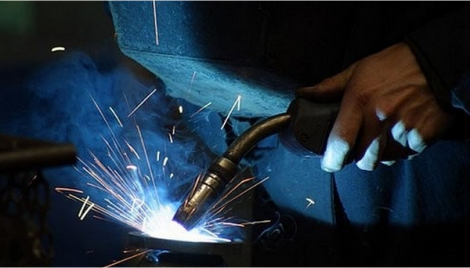
The high level of professional skill of our specialists and modern high-performance equipment with special tongs for double-sided welding allow us to fulfill serial orders of the highest complexity with the highest quality.
The price of welding work depends on the scope of the work to be done, the level of complexity, the type and quantity of consumables, and the type of welding itself.


The welding process requires specialists to understand material properties, precision, and practical experience. Modern equipment enables specialists to achieve accuracy and productivity during work.
Welding tasks are performed using manual machines, automatic, and semi-automatic units.
Professional welding equipment allows for high-quality joints, with increased speed and precision in the execution of tasks.
Submit a request right now and get a free consultation

We contacted “Eskal” to obtain high-quality products through welding. All conditions were met, and the metal products perfectly matched the specified characteristics. Thank you very much!
I extend my heartfelt thanks to “Eskal” for the prompt and high-quality welding of the provided metal products. The quality of the work is exceptional!
After the deadlines were met, I received high-quality welded metal structures. I was very impressed by the speed and responsibility in the work of your company!
We use three types of welding in our work: semi-automatic, contact welding, and welding in protective gases. Due to the nature of our services, we most frequently perform spot welding, stainless steel welding, and semi-automatic welding.
So, if you are interested in spot welding services or welding production services in general, please call us or leave a request on our website.
Chemical welding is used when there is a chemical interaction between the surfaces being welded, either directly or with the application of an additional material called a filler.
Friction welding is used when parts are joined through intense friction. For example, this method is used to connect the ends of cylindrical parts, such as rods of larger diameters.
Preparation usually includes the following steps:
– Cleaning the surfaces of the parts to be welded from dirt and rust;
– Edge preparation if the metal thickness is large;
– Setting the gap between the edges to be welded;
– Tack welding the parts, ensuring adherence to the geometric dimensions of the detail.
Additional measures may be required, such as preheating aluminum parts if the thickness of the aluminum is significant.


